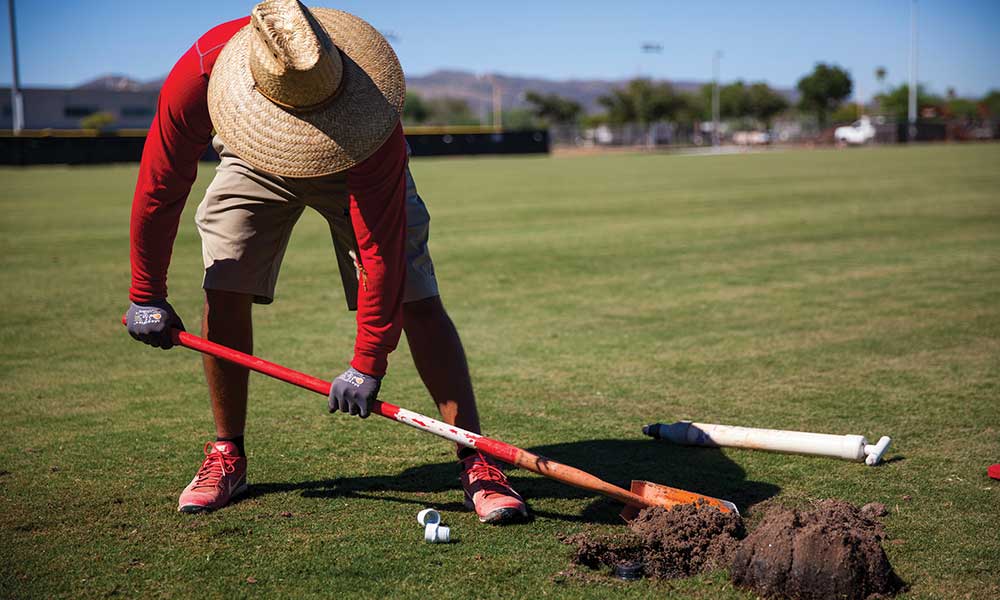
On a golf course, sunshine is part of the job description. But for grounds maintenance crews and turf professionals, that same sunshine quietly carries one of the most serious occupational risks in the industry.
Skin cancer is not just a recreational hazard—it’s a workplace issue. Outdoor workers, including golf course maintenance crews, superintendents, and turfgrass professionals, face significantly higher risks due to long hours of repeated ultraviolet (UV) exposure. In fact, workplace sun exposure can increase the risk of nonmelanoma skin cancer by as much as 60%.
And unlike a single day on the course, the danger here is cumulative—built slowly over years of early mornings, long afternoons, and season after season maintaining fairways, greens, and bunkers under open skies.
It’s time to move sun safety from “good advice” to standard operating procedure across every golf facility.
The Reality: Turf Maintenance Is High-Risk Outdoor Work
Golf course environments are uniquely exposed. Grounds crews often work during peak sunlight hours, typically between 10 a.m. and 4 p.m., when UV radiation is strongest.
Add in reflective surfaces such as sand bunkers, water hazards, and even light-colored cart paths, and exposure increases from both above and below.
Even cloudy days don’t offer real protection. UV rays still penetrate, quietly damaging skin over time.
For many golf course maintenance professionals, especially those with decades in turf management, the risk isn’t theoretical—it’s already accumulating.
From Awareness to Action: The “Fab 5” Approach for Golf Course Operations
Borrowing from leading safety guidance and industry best practices, here are five essential strategies every golf course superintendent and operations team should build into daily routines.
1. Adjust Turf Maintenance Schedules When Possible
Reducing exposure starts with timing. Whenever feasible, schedule high-exposure tasks such as mowing fairways, bunker work, and irrigation repairs earlier in the morning or later in the afternoon.
Rotating crew assignments across different areas of the course can also help limit prolonged sun exposure.
Even small adjustments can significantly reduce total UV exposure over time.
2. Build Shade Into the Golf Course Workday
Shade isn’t a luxury—it’s a control measure.
Provide shaded break areas near maintenance facilities, mobile canopies for on-course projects, and opportunities for crews to step out of direct sun during long shifts.
Creating shade reduces cumulative exposure and supports overall crew health and productivity.
3. Standardize Protective Gear for Grounds Crews
Uniform standards for golf course maintenance staff should include wide-brim hats or neck protection, long-sleeve breathable work shirts, and UV-blocking sunglasses.
Turf crews are already outfitted for performance—adding sun protection simply elevates the standard of care.
Tightly woven or UPF-rated apparel offers better protection than standard fabrics and is increasingly designed for comfort in hot conditions.
4. Make Sunscreen Part of Daily Turf Operations
Sunscreen should be as routine as equipment checks before heading out to the course.
Use broad-spectrum SPF 30 or higher, apply it before the workday begins, and reapply every two hours or more often during heavy perspiration.
Keep sunscreen stocked in maintenance buildings, break areas, and utility vehicles to ensure it’s always within reach.
5. Promote Awareness Across the Golf Maintenance Team
Education is the multiplier.
Grounds maintenance crews should understand how to recognize early warning signs such as new or changing spots or sores that don’t heal. Encourage routine self-checks and professional skin screenings.
Hands, neck, ears, and face—areas most exposed during daily turf work—deserve special attention.
Early detection dramatically improves outcomes and helps protect long-term health.
Leadership Matters in Golf Course Operations
The most effective safety programs on a golf course don’t rely on individual habits alone—they’re built into the culture of the operation.
Golf course superintendents, general managers, and owners play a critical role by setting expectations, providing resources, and reinforcing sun safety as part of overall workplace safety protocols.
When leadership treats sun protection like any other essential part of turf management, crews follow.
A Quiet Risk Across the Golf Industry
Golf is often associated with fresh air and outdoor enjoyment, but for those who maintain the course, it also means sustained UV exposure.
For grounds maintenance crews and turf professionals, the course is more than a workplace—it’s a long-term environment of exposure.
The encouraging news is that this risk is highly preventable.
With the right habits, proper gear, and a proactive mindset, skin cancer prevention can become just another part of daily golf course operations.
Final Thought
The goal isn’t to keep crews off the course—it’s to keep them safe while they’re on it.
Because protecting your turf team today ensures they remain healthy, productive, and part of your golf operation for years to come.