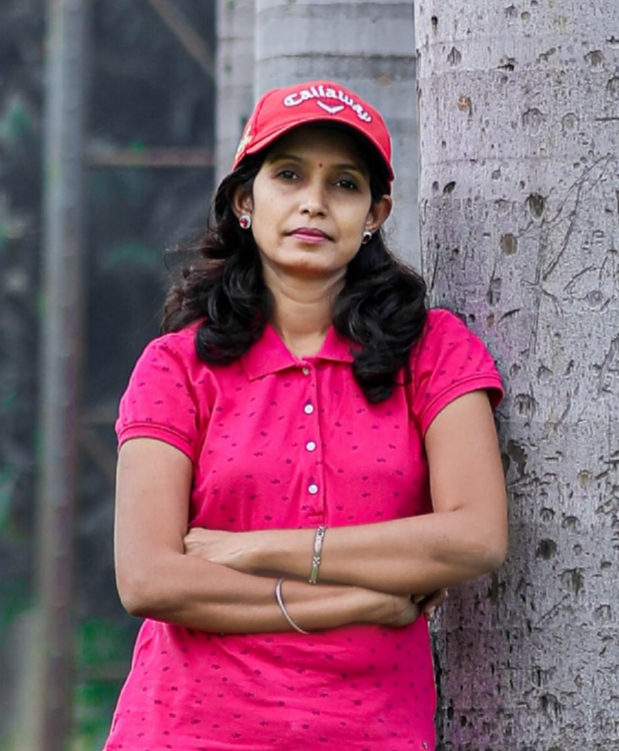
Long before most golfers arrive at the first tee, Harshada Abhyankar has already spent hours evaluating turf conditions, assessing weather impacts, reviewing maintenance priorities, and preparing her team for the day ahead.
For more than 22 years, that routine has been part of a career built on discipline, technical expertise, resilience, and a genuine passion for the science and art of golf course management. Today, Abhyankar serves as Golf Course Superintendent and Project In-Charge for a major drainage and irrigation modernization project at the historic Royal Calcutta Golf Club, one of the most storied golf facilities in the world. Established in 1829, Royal Calcutta is recognized as the oldest golf club outside the British Isles and remains one of the most significant landmarks in the game’s global history.
Her path to this role was anything but conventional.
Armed with a Master’s degree in Agriculture from Pune Agricultural College, Abhyankar entered a profession that few women in India pursued and even fewer remained in long enough to build a lasting career. Over the years, she worked at four different golf courses, navigating diverse climates, turfgrass species, management structures, languages, and cultural expectations. Each assignment brought new challenges, but also new opportunities to grow as an agronomist, leader, and problem-solver.
The profession itself is demanding. Golf course management requires early mornings, long days, and an ability to adapt to constantly changing conditions. A superintendent may begin the day worrying about irrigation performance and end it addressing disease pressure, staffing challenges, tournament preparations, or unexpected weather events. Success requires a unique combination of science, leadership, communication, and perseverance.
For Abhyankar, there was an additional challenge.
As a woman working in one of golf’s most traditionally male-dominated professions, she often found herself having to prove her technical knowledge and leadership capabilities before earning acceptance from staff, members, and stakeholders. Rather than allowing those obstacles to define her, she focused on results.
“Over time, professionalism, technical knowledge, and delivering measurable improvements earned respect,” she explains. “The journey was challenging, but it strengthened my determination and helped establish credibility within the industry.”
That credibility has been recognized throughout her career. She has received numerous honors, including India’s Best Golf Course Superintendent Award and Best Turf Professional of India. She has also been associated with golf courses recognized among the Rolex World’s Top 1000 Golf Courses. Yet when asked about her greatest accomplishment, her answer is surprisingly personal.
More than awards or rankings, she takes pride in the relationships she has built and the respect she has earned from the teams she has led throughout her career.
Perhaps even more remarkable is how she balanced that demanding career with family life. During both pregnancies, she continued working, sometimes leaving home as early as 3:00 a.m. to prepare golf courses for tournament play. Those experiences, she says, taught her resilience, perseverance, and commitment in ways few professional challenges ever could.
Today, as the golf industry continues to evolve through advances in technology, sustainability initiatives, and changing workforce dynamics, Abhyankar remains optimistic about the future. She is particularly excited about innovations such as artificial intelligence, precision spraying systems, advanced moisture monitoring, and data-driven turf management practices that promise to help superintendents maintain exceptional playing conditions while using resources more efficiently.
Golf Course Trades recently sat down with Abhyankar to discuss her journey, leadership philosophy, the realities of managing one of the world’s historic golf clubs, and why, after more than two decades in the profession, the challenge of making a golf course better tomorrow than it was today still excites her.
Finding Her Path in Turfgrass Management
Golf Course Trades: What first sparked your interest in golf course management and turfgrass science?
Harshada Abhyankar: I always wanted to pursue a career that was different from a conventional 9-to-5 office job. I was looking for a profession that combined science, fieldwork, problem-solving, and continuous learning.
Golf course management entered my life almost by accident, but once I stepped into the industry, I discovered a passion for turfgrass science and course conditioning. Over time, what began as an unexpected opportunity evolved into a lifelong profession that continues to challenge, inspire, and motivate me every day.
Golf Course Trades: Can you tell us about your career path and the experiences that led you to your current role?
Harshada Abhyankar: I hold a Master’s degree in Agriculture from the prestigious Pune Agricultural College in India. Over the past 22 years, I have built my career through hands-on experience across four different golf courses, each presenting unique agronomic, operational, and management challenges.
Working in diverse regions exposed me to varying climatic conditions, turfgrass species, languages, cultural differences, committee expectations, and operational structures. These experiences taught me adaptability, resilience, communication, and leadership.
Every challenge, from managing language barriers to handling committee expectations and delivering championship-level playing conditions, has contributed to shaping me into the confident turf professional I am today.
Golf Course Trades: As a woman in a traditionally male-dominated profession, what challenges have you faced, and how have you navigated them?
Harshada Abhyankar: The challenges began long before entering the profession. In India, women often face societal expectations and limitations from an early stage. Golf course management demands extremely early mornings, long working hours, and a significant commitment to on-ground operations. It is not uncommon to leave home at 4:00 a.m. to prepare a golf course for daily play, or even earlier during tournaments.
Professionally, being a woman in a field dominated by men required me to continuously prove my technical competence and leadership capabilities. Initially, some staff, members, and stakeholders found it difficult to accept a woman leading large maintenance operations. Rather than reacting emotionally, I allowed my work, consistency, and results to speak for themselves.
Over time, professionalism, technical knowledge, and delivering measurable improvements earned respect. The journey was challenging, but it strengthened my determination and helped establish credibility within the industry.
Golf Course Trades: Who have been your biggest mentors or influences throughout your career?
Harshada Abhyankar: My greatest influences have been my parents, who instilled discipline, resilience, and the courage to pursue unconventional paths.
Spiritually and philosophically, my Guru, Sadhguru, has been a significant source of inspiration, particularly in helping me maintain balance, clarity, and perspective while managing the demands of a highly challenging profession.
Golf Course Trades: What accomplishment in your 22-plus years of golf course management are you most proud of?
Harshada Abhyankar: While awards and recognitions are important milestones, my proudest accomplishment is sustaining and excelling in a highly demanding, male-dominated profession for more than two decades.
I am proud of earning the trust and respect of my teams, many of whom remain in contact years after we worked together. Professional recognition such as Rolex Top 1000 course achievements, industry awards, and superintendent honors are gratifying, but the lasting respect of colleagues and crew members is the achievement I value most.
Managing a Historic Golf Course
Golf Course Trades: Tell us about the golf course you currently oversee. What makes it unique?
Harshada Abhyankar: I currently serve as Project In-Charge for the Drainage and Irrigation Modernization Project and Golf Course Superintendent at the historic Royal Calcutta Golf Club.
Established in 1829, it is recognized as the oldest golf club outside the British Isles and one of the most historically significant golf courses in the world. Managing such a heritage property is both a privilege and a responsibility. Balancing modern agronomic requirements with the preservation of the club’s historic character makes the role particularly unique.
Golf Course Trades: What turfgrass species do you manage, and what are the primary challenges associated with maintaining them in your region of India?
Harshada Abhyankar: The golf course is primarily composed of common Bermuda grass, although over the years various hybrid cultivars have naturally mixed into the turf population. We also face periodic Paspalum infestation in certain areas.
Kolkata’s location near the Bay of Bengal creates a hot, humid, and windy environment. Agronomically, the major challenges include excessive nutrient leaching due to heavy rainfall, high iron content in irrigation water, disease pressure associated with humidity, and maintaining consistency under rapidly changing weather conditions.
Operationally, manpower management, time-sensitive maintenance scheduling, and communication across multilingual workforces add additional complexity to day-to-day operations.
Golf Course Trades: How do climate and seasonal conditions influence your turf management practices?
Harshada Abhyankar: Climate is one of the most critical factors influencing turfgrass management. Kolkata experiences high temperatures, elevated humidity levels, heavy monsoon rainfall, and occasional weather extremes.
Seasonal transitions significantly impact turf growth rates, nutrient uptake, water requirements, disease pressure, and playability. During monsoon periods, drainage efficiency, moisture management, and disease prevention become priorities. During peak summer, irrigation precision, stress management, and maintaining turf vigor are essential.
A successful superintendent must anticipate seasonal changes rather than react to them. Agronomic programs must remain flexible and data-driven, adjusting irrigation schedules, fertility inputs, cultivation practices, and growth management strategies according to prevailing environmental conditions.
Golf Course Trades: What are the most important factors you consider when developing an irrigation strategy for a golf course?
Harshada Abhyankar: My irrigation philosophy is based on turf requirement rather than irrigation system capability.
Bermudagrass is an exceptionally drought-tolerant species and performs best when managed under controlled moisture conditions. Overwatering reduces rooting depth, increases disease susceptibility, decreases firmness, and negatively impacts playability.
When developing irrigation strategies, I consider soil moisture levels, rootzone characteristics, evapotranspiration rates, weather forecasts, turf stress indicators, and playing conditions and firmness requirements.
The goal is always to apply the right amount of water at the right time to maintain healthy turf while promoting deep rooting and resource conservation.
Golf Course Trades: What does a typical day look like for you during peak growing season?
Harshada Abhyankar: Every day in golf course management demands attention and decision-making regardless of the season. During peak growing periods, the pace simply intensifies.
My day typically begins before sunrise with course inspections, staff assignments, quality control evaluations, and prioritization of maintenance activities. Throughout the day, I monitor turf health, irrigation performance, mowing quality, project progress, weather conditions, and operational logistics.
Tournament preparations require even greater precision, as every detail, from green speed and surface uniformity to presentation standards, must meet championship expectations.
Agronomy, Sustainability and Resource Management
Golf Course Trades: How do you balance playability, aesthetics, sustainability, and budget considerations when making turf management decisions?
Harshada Abhyankar: Achieving balance requires experience, technical understanding, and strategic planning. Every management decision influences multiple outcomes.
My objective is to maximize playability and turf health while utilizing resources responsibly. Sustainable agronomic practices often improve long-term economic efficiency. Decisions regarding irrigation, fertility, labor allocation, and equipment utilization are evaluated based on their impact on course conditions, environmental stewardship, and operational costs.
The ability to balance these competing priorities is developed through years of practical experience and continuous learning.
Golf Course Trades: What turf maintenance practices have proven most effective in maintaining healthy playing conditions while conserving resources?
Harshada Abhyankar: For our climatic conditions, the most effective practices include precision irrigation based on turf demand, targeted fertility programs rather than blanket applications, regular soil testing and nutrient monitoring, strategic aeration and cultivation practices, effective drainage management, integrated pest management, moisture monitoring, and localized hand watering.
These practices optimize resource utilization while maintaining high-quality playing conditions throughout the year.
Golf Course Trades: Have you implemented any innovative techniques, technologies, or sustainable practices?
Harshada Abhyankar: One of my key contributions throughout my career has been optimizing fertilizer programs to achieve maximum turf performance with minimum input costs.
I strongly believe that human resource management is equally important as agronomy. Understanding the strengths of individual team members and assigning responsibilities accordingly significantly improves productivity and operational efficiency.
Additionally, I have implemented data-based irrigation scheduling, precision nutrient management, and workforce optimization strategies that have consistently improved both course conditions and budget efficiency.
Golf Course Trades: What are the biggest turfgrass challenges facing golf course managers today?
Harshada Abhyankar: Climate change is undoubtedly one of the biggest challenges facing modern turfgrass managers.
Unpredictable weather patterns, extreme temperatures, irregular rainfall events, and increasing environmental pressures make it increasingly difficult to deliver consistent playing conditions. Simultaneously, golfer expectations continue to rise while resources often remain constrained.
The industry’s future will depend upon greater adoption of technology, improved water management practices, data-driven decision-making, and enhanced agronomic education.
Leadership and Team Development
Golf Course Trades: What leadership principles guide your management of golf course staff and operations?
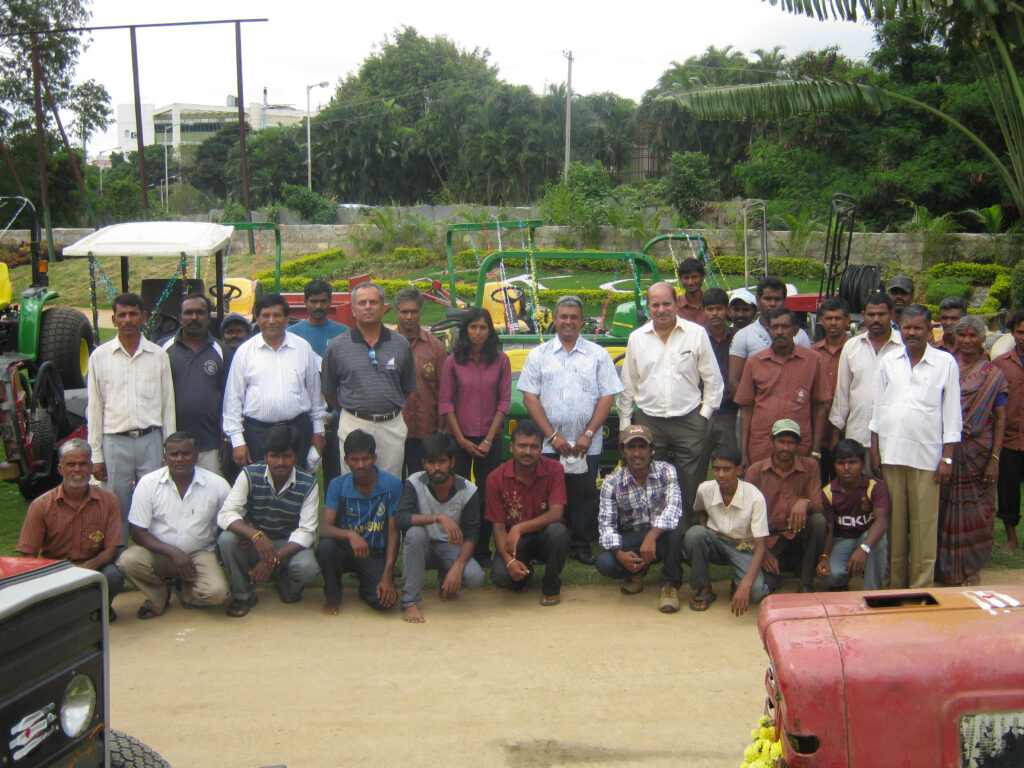
Harshada Abhyankar: My leadership philosophy is based on respect, accountability, consistency, and leading by example.
I believe a superintendent must never ask a team member to perform a task they are unwilling to perform themselves. Strong leadership is built through visibility, fairness, technical competence, and maintaining open communication with all stakeholders.
Golf Course Trades: How do you foster teamwork and professional development among your crew members?
Harshada Abhyankar: I believe people perform best when they understand both the purpose and importance of their work.
Training, mentoring, and empowering team members are essential. I encourage skill development, cross-functional learning, and active participation in problem-solving. Creating a culture of mutual respect and ownership helps build stronger teams and improves overall operational performance.
Golf Course Trades: What skills are most essential for the next generation of golf course superintendents?
Harshada Abhyankar: Future superintendents must possess strong agronomic knowledge, leadership skills, adaptability, and technological competence.
Most importantly, they must understand that golf course management is fundamentally a ground-based profession. Success cannot be achieved from behind a desk. Understanding soils, turfgrass behavior, irrigation, and field operations through direct observation remains indispensable.
Women in the Industry
Golf Course Trades: Have you seen opportunities for women in golf course management evolve during your career?
Harshada Abhyankar: To be candid, golf course maintenance remains one of the most physically demanding and operationally intensive professions within the golf industry. Despite growing conversations around diversity and inclusion, the number of women entering turfgrass management remains very limited, particularly in India.
The profession demands extremely early mornings, long working hours, exposure to all weather conditions, and continuous on-ground decision-making. While opportunities may have improved in certain sectors of the industry, golf course maintenance still presents significant practical challenges for women.
I believe more institutional support, awareness, and mentorship programs are needed to encourage greater female participation in turfgrass management and golf course operations.
Golf Course Trades: What advice would you give to young women considering careers in turfgrass management, agronomy, or golf course operations?
Harshada Abhyankar: My advice would be to enter the profession with complete awareness of both its rewards and challenges.
Golf course management is not merely a job. It is a lifestyle. It requires dedication, resilience, technical competence, and a genuine passion for working outdoors. For women, the journey can be particularly demanding as they often balance professional responsibilities alongside family commitments.
Success is absolutely achievable, but one must be prepared to overcome challenges that begin not only in the workplace but sometimes within societal and family expectations as well. If you are passionate about agronomy, leadership, and creating exceptional playing conditions, then this profession can be incredibly rewarding.
Golf Course Trades: Why is it important to have more women represented in leadership positions throughout the golf industry?
Harshada Abhyankar: Golf course management is fundamentally about nurturing living ecosystems. Turf, landscapes, and golf facilities require constant care, observation, patience, and attention to detail.
Women naturally bring many of these qualities into leadership roles. Their ability to balance empathy with discipline, strategic thinking with practical execution, and long-term vision with daily operational management can greatly benefit the golf industry.
Greater female representation in leadership positions promotes diversity of thought, strengthens organizational culture, and encourages future generations of women to pursue careers within golf. The industry benefits when leadership reflects a broader range of perspectives and experiences.
Related – Women Golf Course Superintendents
Looking Ahead
Golf Course Trades: What trends or innovations in golf course management are you most excited about for the future?
Harshada Abhyankar: Artificial intelligence and precision turf management technologies have tremendous potential to transform golf course maintenance.
One innovation that particularly excites me is AI-guided precision spraying technology, which can identify weeds individually and apply herbicides only where required. This significantly reduces chemical usage, lowers costs, and improves environmental sustainability.
Beyond AI spraying systems, advances in soil moisture monitoring, weather analytics, GPS-guided equipment, drone technology, and predictive agronomic software will enable superintendents to make increasingly informed decisions while optimizing resources and improving course conditions.
Golf Course Trades: What goals or projects are you currently working toward?
Harshada Abhyankar: Currently, I am overseeing a major drainage and irrigation modernization project while simultaneously managing the maintenance of an 18-hole championship golf course at the Royal Calcutta Golf Club.
My objective is not merely to complete the project successfully but to elevate the golf course to an entirely new level of performance, consistency, sustainability, and year-round playability. The successful integration of modern infrastructure with sound agronomic practices will create long-term benefits for both golfers and future course management teams.
Golf Course Trades: Is there anything else you’d like our readers to know about your journey, your work, or the future of golf course management?
Harshada Abhyankar: One aspect of my journey that many people may find surprising is that I continued working throughout both of my pregnancies.
There were days when I left home at 3:00 a.m. to reach the golf course by 4:00 a.m. to begin tournament preparations. During my second pregnancy, I was involved in a new golf course development project while simultaneously managing ongoing maintenance responsibilities.
Balancing motherhood, family responsibilities, and the demands of golf course management was one of the most challenging periods of my life. Those experiences taught me resilience, perseverance, and the importance of commitment. Looking back, they remain among the most defining chapters of my professional journey.
Personal Reflections from the Course
Golf Course Trades: What’s the most difficult turf problem you’ve ever faced, and how did you solve it?
Harshada Abhyankar: One of the most challenging aspects of golf course management is maintaining both green speed and turf quality simultaneously.
Many people assume that faster greens simply require lower mowing heights. In reality, excessive pursuit of speed can compromise turf health, root development, surface consistency, and long-term performance.
Achieving tournament-quality green speeds while maintaining turf density, color, recovery potential, and plant health requires a carefully integrated program involving mowing frequency, rolling schedules, fertility management, moisture control, plant growth regulators, and cultural practices.
The solution is never a single practice. It is the successful execution of an entire agronomic system working together.
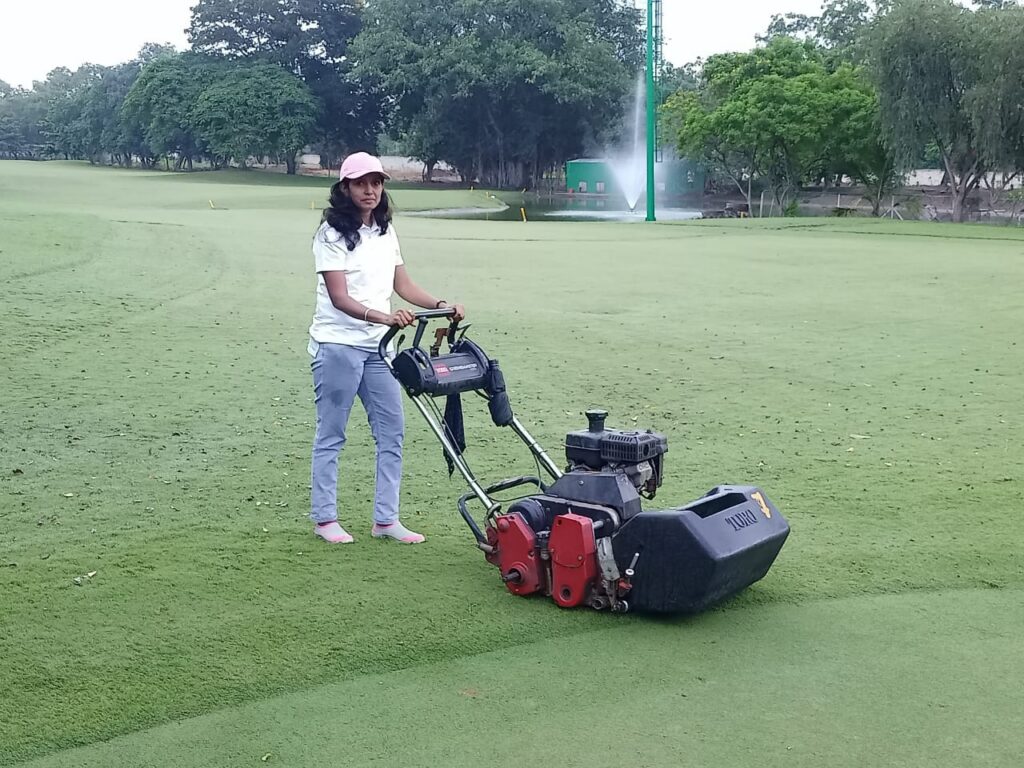
Golf Course Trades: What piece of equipment or technology could you not imagine managing a golf course without, and why?
Harshada Abhyankar: Without question, the greens mower.
Greens are the most scrutinized playing surfaces on any golf course, and their quality largely defines the golfer’s experience. Precision greens mowers directly influence smoothness, speed, consistency, and overall playability.
Looking ahead, I would love to see more advanced self-diagnostic and self-calibrating greens mowers that minimize dependence on mechanical adjustments. Equipment capable of maintaining precise cutting quality with reduced risk of scalping and simplified maintenance would significantly enhance operational efficiency and consistency.
Golf Course Trades: What’s one common misconception golfers have about golf course maintenance or turf management?
Harshada Abhyankar: Perhaps the most common misconception is that golf course maintenance is simple and that “anyone can do it.”
In reality, turfgrass management combines agronomy, soil science, irrigation engineering, plant physiology, meteorology, pest management, equipment management, budgeting, labor management, and strategic planning.
Golfers often compare their course to others without fully understanding the differences in climate, resources, infrastructure, turf species, budgets, and operational constraints. Delivering consistent playing conditions requires a high degree of technical expertise and daily decision-making.
Golf Course Trades: Do golfers ever notice the small details that your team works hard to maintain? If so, what do you wish they appreciated more?
Harshada Abhyankar: Unfortunately, many of the most important maintenance activities go unnoticed because successful golf course management often means preventing problems before they become visible.
I wish golfers better understood the effort involved in preparing surfaces before sunrise, managing moisture levels throughout the day, monitoring turf health, maintaining equipment, and coordinating labor resources. Every detail contributes to the overall experience, even when it is not immediately visible.
Golf Course Trades: What is your favorite hole on the course you manage, and what makes it special to you?
Harshada Abhyankar: My favorite hole is the 3rd hole.
There is something uniquely peaceful and uplifting about that area of the course. It is difficult to explain scientifically, but I often experience a sense of calmness and positivity there. Amid the daily pressures of golf course management, it remains one of the places where I can briefly pause, reflect, and reconnect with the beauty of the game and the landscape.
Golf Course Trades: Is there a particular project or improvement you’ve completed that you’re especially proud of?
Harshada Abhyankar: More than any individual project, I am proud of completing more than 22 years in one of the most demanding professions within the golf industry.
During my career, I have been fortunate to contribute to courses that achieved recognition in the Rolex Top 1000 rankings, receive industry awards including India’s Best Superintendent Award from the Golf Industry Association of India, and be recognized through various professional honors.
However, the achievement I value most is earning professional respect through consistent dedication, technical competence, and perseverance.
Golf Course Trades: What aspect of golf course management still excites you after more than two decades in the profession?
Harshada Abhyankar: Every day presents a new challenge.
No two days in golf course management are ever identical. Weather changes, turf conditions evolve, operational priorities shift, and golfer expectations continue to increase.
The excitement comes from solving new problems, adapting to changing circumstances, and continuously striving to improve the golf course. Every morning begins with the anticipation of what the day will bring and how best to manage it.
Golf Course Trades: If you could spend one day with any golf course superintendent, agronomist, or golf industry leader, past or present, who would it be and why?
Harshada Abhyankar: I would choose to spend a day with Tiger Woods and the superintendent responsible for maintaining his preferred playing environments.
Tiger Woods has experienced golf at the highest level across virtually every major championship venue in the world. Understanding his perspectives on course conditioning, playability, strategic design, and performance expectations would be fascinating.
Equally interesting would be learning how superintendents prepare surfaces capable of meeting the standards of the world’s most elite golfers while maintaining long-term turf health.
Golf Course Trades: When golfers leave the course after a great round, what’s one thing you hope they take away from their experience?
Harshada Abhyankar: Above all else, I hope they leave with a peaceful and stress-free mind.
Golf courses are far more than sporting venues. They are living landscapes where people come to reconnect with nature, challenge themselves, build friendships, and temporarily escape the pressures of daily life.
If golfers leave the course feeling refreshed, relaxed, and eager to return, then I believe we have successfully fulfilled our purpose as golf course professionals.