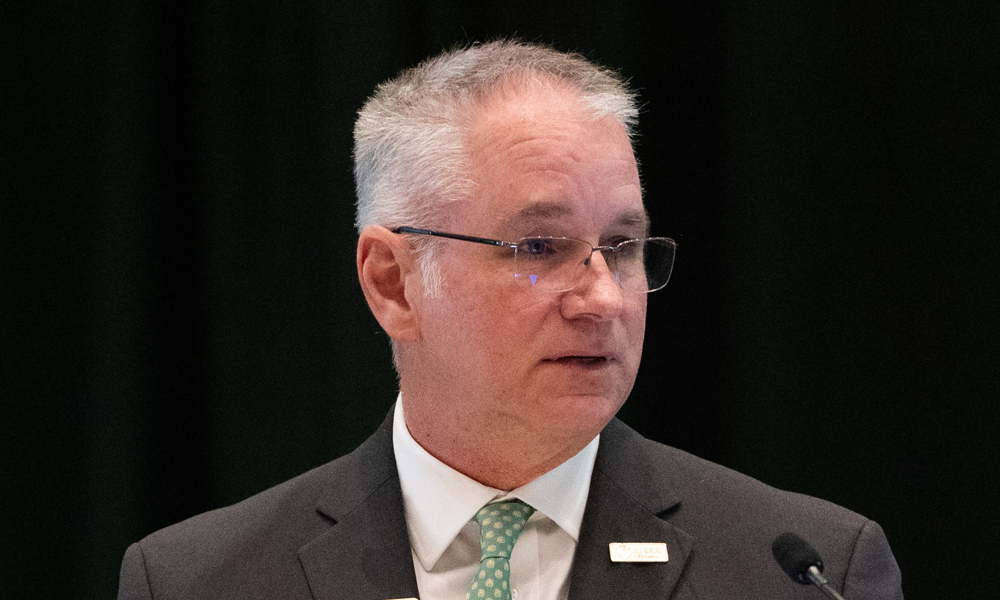
You may have already heard that Paul L. Carter is the new president of the Golf Course Superintendents Association of America. That’s big news in the golf world. After all, becoming the 89th president during the association’s Centennial year is no small achievement.
But here’s the real question:
Do you know the full story behind the man now leading 21,000 members in more than 78 countries?
Because once you do, you’ll understand that this isn’t just a leadership appointment. It’s the continuation of a remarkable journey rooted in environmental excellence, innovation, and service.
From Summer Intern to National Leader
Paul L. Carter’s story doesn’t begin in a boardroom. It begins over 25 years ago as a summer intern at The Country Club of Birmingham in Alabama. That early exposure sparked something lasting—a passion for golf course maintenance and environmental responsibility.
He later earned a bachelor’s degree in agriculture sciences from Auburn University, laying the academic foundation for what would become a career defined by both agronomic excellence and ecological stewardship.
By 2001, Carter had become superintendent at The Bear Trace at Harrison Bay, a public course located within Tennessee State Parks. What happened next would set him apart—not just regionally, but nationally.
The Bear Trace at Harrison Bay: A Living Environmental Showcase
The Bear Trace isn’t just any golf course. It’s a Jack Nicklaus Signature Golf Course and one of nine courses on the Tennessee Golf Trail.
Under Carter’s leadership, it has become something even more meaningful: a national model for environmental stewardship.
Here’s what that looks like in action:
- Reduced chemical use by 75%
- Trimmed 50 acres of managed turf
- Saved more than 7.4 million gallons of water annually
- Achieved Audubon Cooperative Sanctuary certification
- Earned certification from the Golf Environment Organization (GEO)
Carter didn’t just maintain turf. He redefined what responsible golf course management could look like.
Paul L. Carter and Environmental Stewardship Excellence
In 2015, Carter received the prestigious President’s Award for Environmental Stewardship from GCSAA. The award recognizes “an exceptional environmental contribution to the game of golf.”
That recognition wasn’t a one-off.
He previously earned:
- National Environmental Leadership in Golf Award
- Four consecutive regional environmental awards
- Governor’s Environmental Stewardship Awards (2009, 2012)
- Groundwater Guardian Green Site designation
The message was clear: Paul L. Carter wasn’t just improving a golf course. He was protecting an ecosystem.
The Harrison Bay Eagle Cam: A Global Wildlife Window
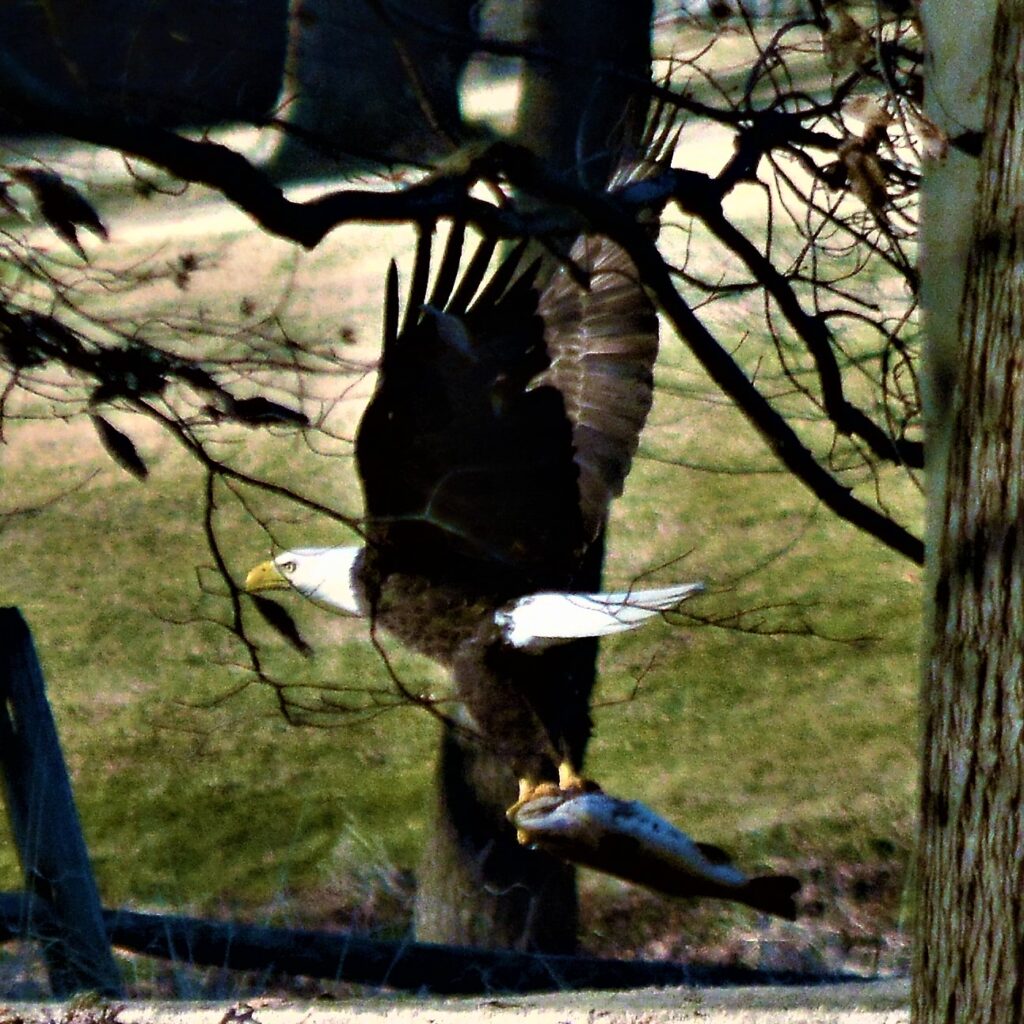
In 2010, a pair of bald eagles—later named Elliott and Eloise—built a nest behind the 10th green at Bear Trace. Instead of treating it as an obstacle, Carter saw an opportunity.
The result?
The Harrison Bay Eagle Cam Project.
A camera was installed above the nest, streaming live footage online. Since 2011:
- Over 2 million unique viewers
- Viewers from 63 countries
- Global exposure to wildlife thriving on a golf course
The Eagle Cam proved something powerful: golf courses can serve as environmental sanctuaries.
And when Eloise was replaced by Eliza in 2016, the story—and the eagle family—continued to grow.

Mallard Duck Nesting Tubes: Innovation in Action
Carter’s conservation mindset doesn’t stop at eagles.
His team constructed and installed elevated nesting tubes for mallard ducks on irrigation lakes. Built from PVC and fencing materials, these tubes:
- Protect nests from predators
- Cost approximately $35 each
- Were quickly used by multiple duck pairs
Simple. Affordable. Effective.
That’s environmental leadership at the ground level.
Turf Innovation: Setting New Standards in Tennessee
When creeping bentgrass greens underperformed in Tennessee’s climate, Carter made a bold move. He converted to ultradwarf bermudagrass—becoming one of the first in eastern Tennessee to do so.
The results?
- Improved putting quality
- Reduced total inputs
- Lower long-term maintenance costs
It wasn’t just agronomic innovation. It was sustainable progress.
Leadership Beyond the Course
Paul L. Carter has been deeply involved in professional leadership for decades.
- 33-year member of GCSAA
- Board member since 2019
- Vice president in 2025
- President in 2026 (Centennial year)
- Past president, Tennessee Turfgrass Association
- Active in Rounds 4 Research
When he was elected president in Orlando during the GCSAA Conference and Trade Show, his message was powerful:
“It’s not my year. It’s your year. It’s our year. It’s GCSAA’s year.”
That’s not just rhetoric. That’s servant leadership.
Why His Presidency Matters Now
GCSAA turns 100 on Sept. 23, 2026.
Leading during the Centennial isn’t symbolic—it’s strategic. The industry faces challenges:
- Water conservation pressures
- Environmental regulations
- Public perception of golf’s sustainability
- Workforce development
Carter’s career uniquely prepares him to address all four.
He has already demonstrated that golf courses can:
- Reduce resource use
- Protect groundwater
- Provide wildlife habitat
- Serve communities responsibly
And he’s done it on a public course within the Tennessee State Parks system.
Frequently Asked Questions
1. Who is Paul L. Carter?
Paul L. Carter is a Certified Golf Course Superintendent and the 89th president of the Golf Course Superintendents Association of America.
2. Where does he work?
He serves as superintendent at The Bear Trace at Harrison Bay in Tennessee.
3. What environmental awards has he won?
He has received the GCSAA President’s Award for Environmental Stewardship, multiple Environmental Leadership awards, and Governor’s Environmental Stewardship Awards.
4. What is the Harrison Bay Eagle Cam?
It’s a live-stream camera installed above a bald eagle nest on the golf course, viewed by over 2 million people worldwide.
5. What makes Bear Trace environmentally unique?
Reduced chemical usage, water conservation, wildlife habitat programs, Audubon certification, and GEO certification.
6. Why is his GCSAA presidency significant?
He leads during the association’s Centennial year and brings decades of sustainability leadership to the national stage.
Conclusion: More Than a President
Yes, Paul L. Carter is the new president of GCSAA.
But he’s also:
- A conservation advocate
- A turf innovator
- A wildlife champion
- A mentor and leader
His work proves something simple yet powerful:
Golf courses, when managed responsibly, can be environmental assets—not liabilities.
And as GCSAA enters its second century, that message couldn’t be more important.