Arborjet Ecologel Partners in Plant Care
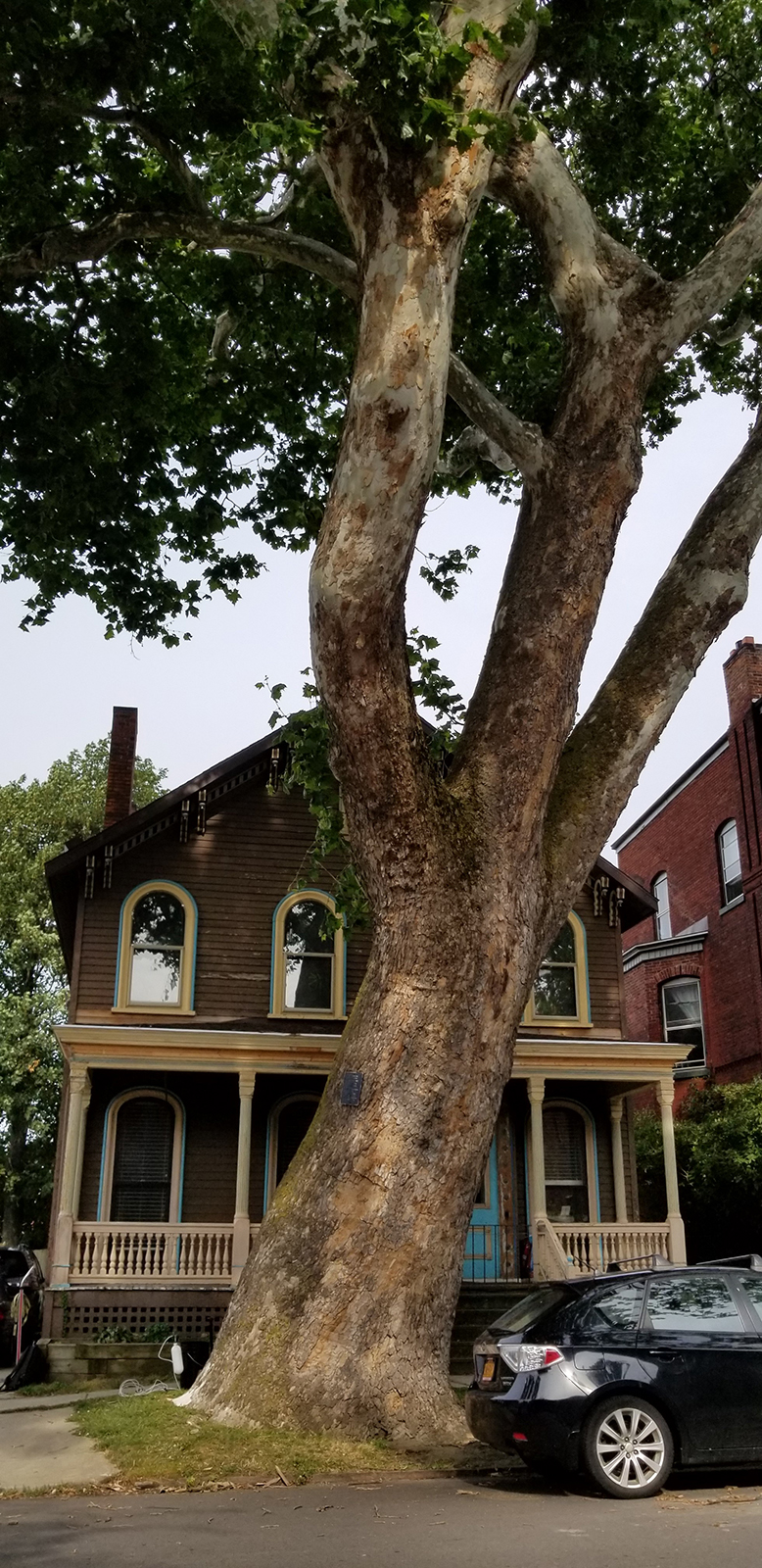
Arborjet, a leader in tree and plant health, will be treating the oldest tree in Buffalo for Anthracnose (Leaf Blight). This is a fungus that winters on twig tissue, causing leaf spots, considerable defoliation, and sometimes complete leaf loss. It weakens the tree and renders it more susceptible to incoming pests and diseases. Because Buffalo’s sycamore is well over 250 years old, treatment is necessary to reduce the impact of Anthracnose, and to assure the tree remains healthy for generations to come.
Different species of Anthracnose impact a variety of tree species, including oak, ash, maple, elm, hickory, walnut, birch, linden, sycamore, and dogwood. Sycamore, white oak and dogwood are particularly susceptible. The primary signs to look for are tan to red-brown lesions that extend along the veins and edges of the leaf.
Experts at Arborjet recommend treatment with Propizol or PHOSPHO-jet by systemic tree injection. Treatment is best applied in the fall when trees are in full leaf and actively growing to help control next season’s anthracnose development. Research shows that PHOSPHO-jet may also be applied following leaf coloration. It inhibits fungal cells while eliciting a plant health response from the tree; promoting stronger, healthier tree cells, enhancing root development, and triggering the tree’s natural defense mechanisms to make it more resistant to infection and better able to recover
Media, residents and local arborists are invited to attend and watch a demonstration of the treatment process and to learn more about the options available to both homeowners and municipalities to protect and save their trees. Arborjet will be working with Davey Tree and SiteOne on this project.
Arborjet will donate the treatment as part of their “Saving America’s Iconic Trees,” program, the company’s latest initiative to ensure the health and longevity of the country’s trees. The campaign targets America’s most beloved trees, often located in public parks and gardens and other historic sites, offering complimentary treatment to prevent insects, disease and poor health.
Research shows that trunk injections not only help save trees but are also far more cost-effective than removing and replacing mature trees.
Albaugh Specialty Products today announced the company has received registration for Pendi MicroCap™ herbicide (EPA…
It was one of the most surreal moments in my journalism career – the interview…
Find trusted suppliers, products and services for every area of your golf course—all in one…
The Kendrick B. Melrose Family Foundation has donated $2 million to the GCSAA Foundation in…
Golf courses and other users of top-quality sports sand in the Eastern U.S. will soon…
CapillaryFlow is a global leader in drainage, moisture control and irrigation systems for golf courses,…